
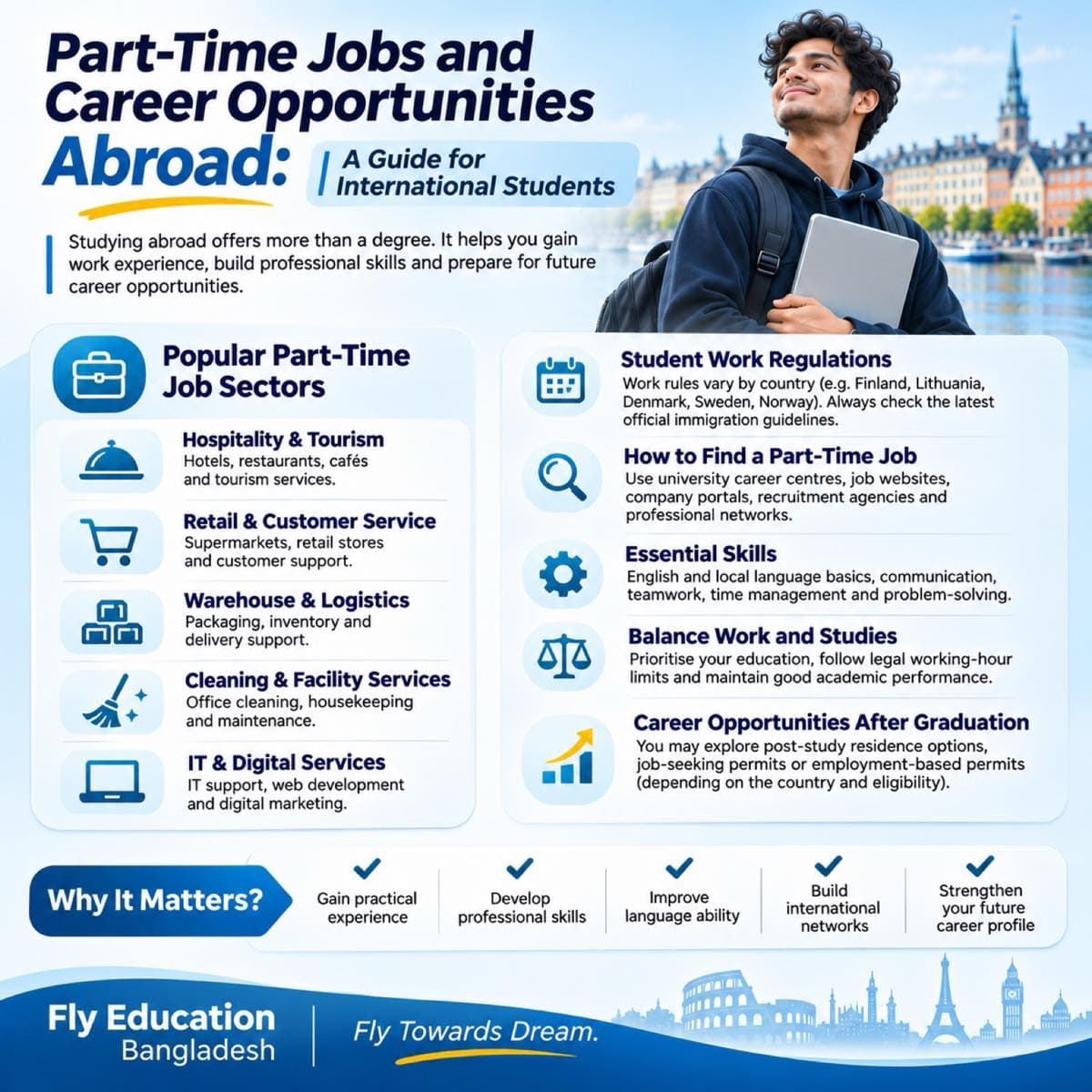
Part-Time Jobs and Career Opportunities Abroad: A Guide for International Students
For many international students, studying abroad is not only about earning a degree but also about developing professional skills, gaining work experience, and preparing for future career opportunities.
European countries offer employment opportunities across different sectors. However, international students must understand local employment regulations before starting any job.
At Fly Education, we encourage students to focus on their education while exploring suitable professional opportunities.
1. Why Work Experience Matters
Part-time employment can help international students:
Develop professional communication skills.
Gain practical workplace experience.
Improve language abilities.
Build professional networks.
Understand international working environments.
Develop financial management skills.
Work experience can also strengthen a graduate's future career profile.
2. Popular Part-Time Job Sectors
International students may explore opportunities in several industries.
Hospitality and Tourism
Hotels.
Restaurants.
Cafés.
Catering services.
Tourism companies.
Retail and Customer Service
Supermarkets.
Shopping centres.
Retail stores.
Customer support services.
Warehouse and Logistics
Packaging.
Inventory management.
Warehouse operations.
Delivery and logistics support.
Cleaning and Facility Services
Office cleaning.
Hotel housekeeping.
Facility maintenance.
IT and Digital Services
Junior IT support.
Web development.
Digital marketing.
Technical assistance.
Availability depends on qualifications, language proficiency, location, and employer requirements.
3. Understand Student Work Regulations
Before accepting employment, students must understand the work conditions attached to their immigration status.
For example:
Finland generally allows students with a study-based residence permit to work an average of 30 hours per week.
Lithuania generally permits international students with the relevant study-based temporary residence permit to work without a separate work permit, subject to applicable rules.
Denmark has specific student work-hour limits depending on the residence permit.
Sweden generally does not impose a fixed statutory weekly work-hour limit on international students, but students must make satisfactory academic progress.
Norway has specific limits on working hours for international students, generally 20 hours per week during studies.
Immigration rules can change, and individual permit conditions may differ. Always verify the latest regulations through official government sources.
4. How to Find a Part-Time Job
Students can explore employment opportunities through:
University career centres.
Official company websites.
Local recruitment agencies.
Professional networking platforms.
Job search websites.
Local business communities.
Personal and university networks.
Preparing an updated CV and a professional cover letter can improve your job application.
5. Essential Skills for International Employment
Students should develop the following skills:
English communication.
Local language basics.
Time management.
Teamwork.
Customer service.
Problem-solving.
Computer literacy.
Professional communication.
Learning the local language can significantly improve access to certain employment opportunities.
6. Balance Work and Studies
Part-time employment should never become more important than education.
Students should:
Attend classes regularly.
Complete assignments on time.
Maintain academic performance.
Follow legal working-hour limits.
Avoid excessive working hours.
Maintain a healthy lifestyle.
Remember that the primary purpose of a student residence permit is education.
7. Career Opportunities After Graduation
After completing their studies, international graduates may have opportunities to explore employment or further education.
Depending on the destination country, graduates may qualify for:
Post-study residence options.
Job-seeking residence permits.
Employment-based residence permits.
Further academic programmes.
Eligibility, application deadlines, and conditions vary by country.
Students should research post-study immigration options before selecting their destination and programme.
How Fly Education Helps Students
Fly Education guides students in exploring international universities, selecting suitable academic programmes, understanding admission requirements, and preparing for their student immigration journey.
We encourage students to choose programmes that align with their long-term career ambitions rather than making decisions based solely on the possibility of part-time employment.
Final Words
International education can provide valuable opportunities for academic development and professional growth.
However, success requires dedication, preparation, and a clear understanding of both educational and employment responsibilities.
Build your skills, prioritise your education, and prepare for a successful international career.
Fly Education – Fly Towards Dream.
- Part-time work
- Careers
Admission requirements, fees, deadlines and visa rules change. Confirm anything in this post against the institution's or authority's own website before you act on it.